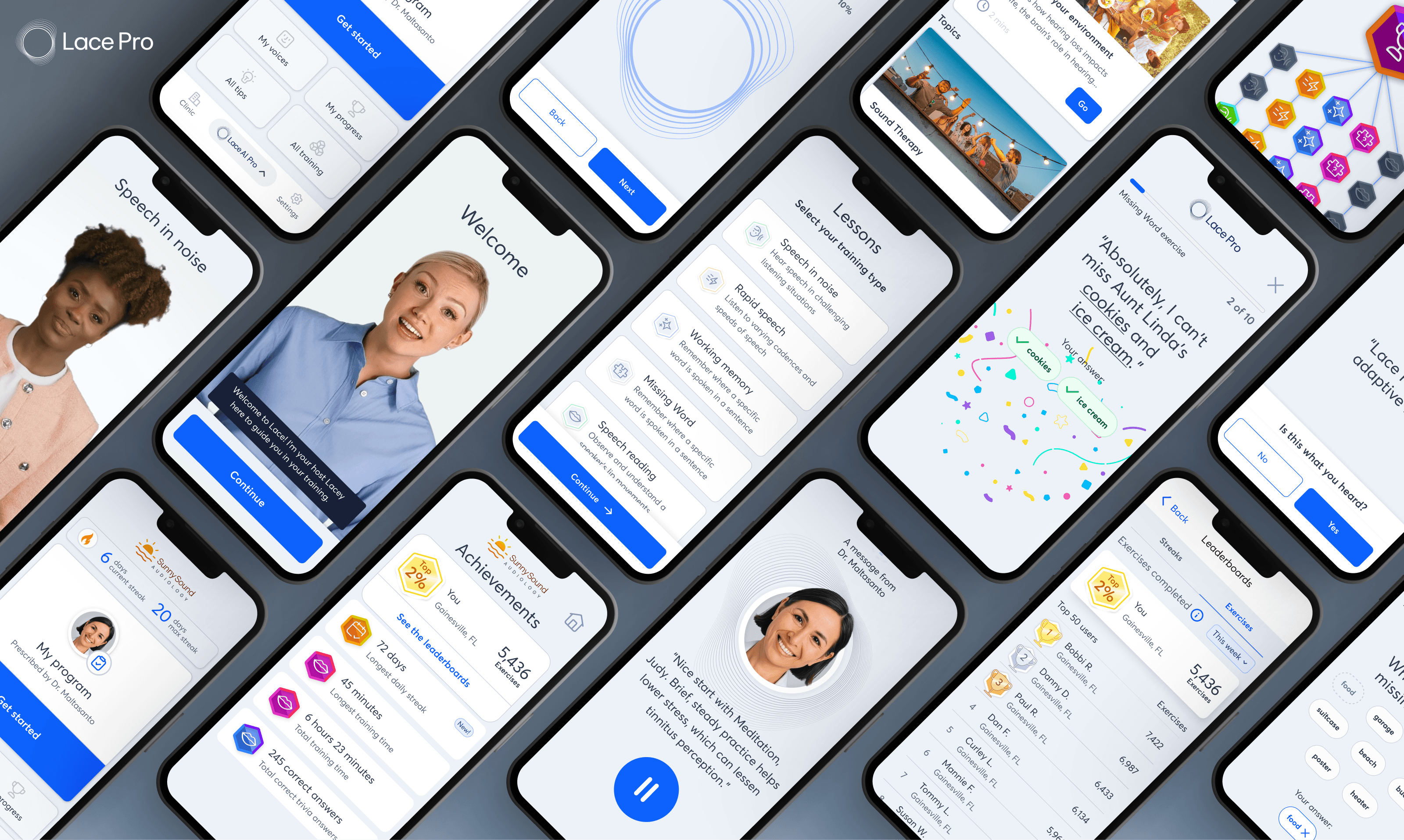
Executive Summary
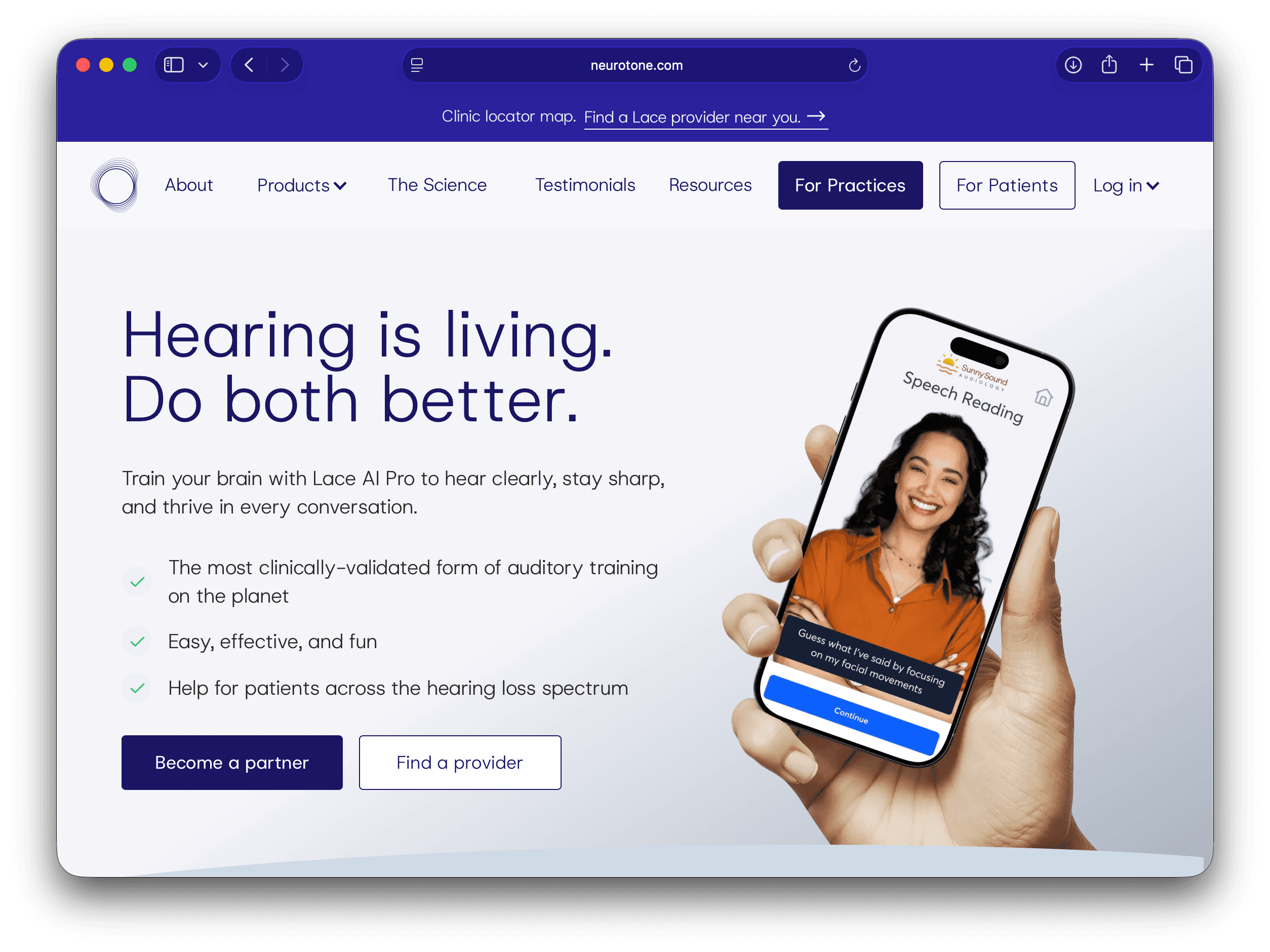
Legacy LACE was an outdated auditory training product with limited scalability, no AI capabilities, and a user experience that couldn't support the clinical outcomes patients needed. I led the complete strategic redesign and platform modernization into Lace Pro, an AI-powered, cross-platform digital therapeutic deployed in over 1,000 clinics nationwide.
This was a 0→1 evolution in a regulated healthcare environment: an FDA Class II device, designed end-to-end in under six months.
10,000+
Exercises across 27 topics
1,000+
Clinics deployed in under a year
6,137
Patients in Q1 2025 outcomes analysis
The platform's clinical outcomes, validated across 6,137 patients in Q1 2025 analysis by Dr. Miles Aron, outperform all previous clinical studies in auditory training. Speech-in-noise improvement of +2.6 dB SNR at therapeutic dose. Rapid speech comprehension gains of +36 WPM in under a month. Working memory response times improving by over 1.5 seconds at effective dose, up to 8 seconds in severe cases.
The design decisions that made the platform work weren't cosmetic. They were clinical.
The Problem
The auditory training market was accelerating. Consumer apps and AI-first competitors were raising the bar on personalization and accessibility, while Legacy LACE remained a browser-based, single-platform product with no AI roadmap and a fixed content library that couldn't scale to new patient populations. Staying still was falling behind.
- Legacy product was outdated with no path to AI integration
- Fixed content library constrained applicability to new patient populations (APD, Hidden Hearing Loss)
- Single-platform delivery didn't match how patients actually live and train
- Competitive products were rapidly advancing on personalization and UX
The Strategy
1. Positioned Dynamic Threshold Training Engine™ technology. A core adaptive layer that adjusts training difficulty in real time based on patient performance. The DTTE optimizes neuroplasticity by keeping patients at the threshold of their ability (~50% accuracy), the precise zone where the brain learns most efficiently. Validated: speech-in-noise improvements follow a strong log fit with R²=0.92 across 6,137 patients, outperforming all prior auditory training clinical studies.
2. Expanded content architecture adding 10,000+ exercises across 27 topics, enabling broader patient applicability (APD, Hidden Hearing Loss, mild HL).
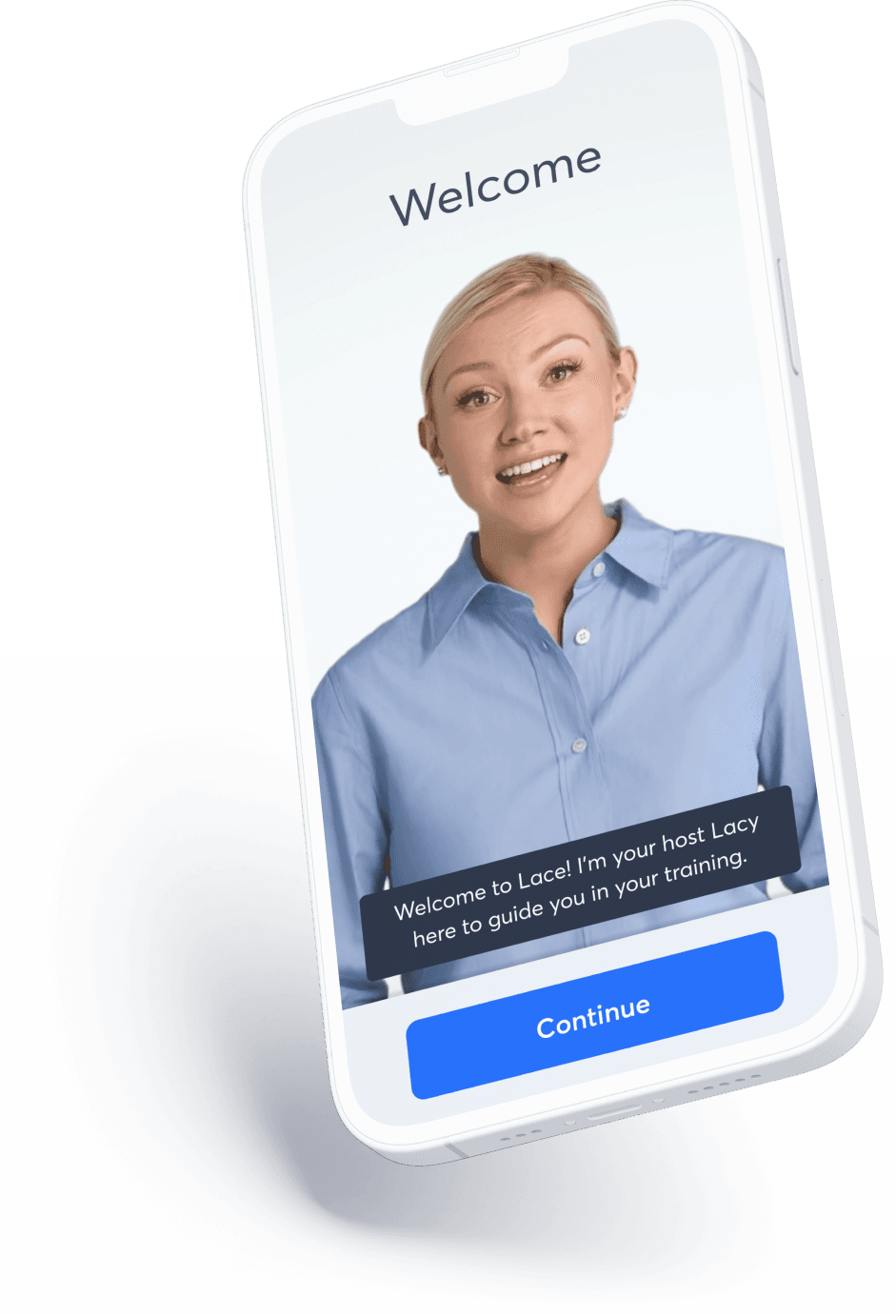
3. Designed an AI coaching and personalization layer including the Familiar Voices feature and AI Avatar guide system.
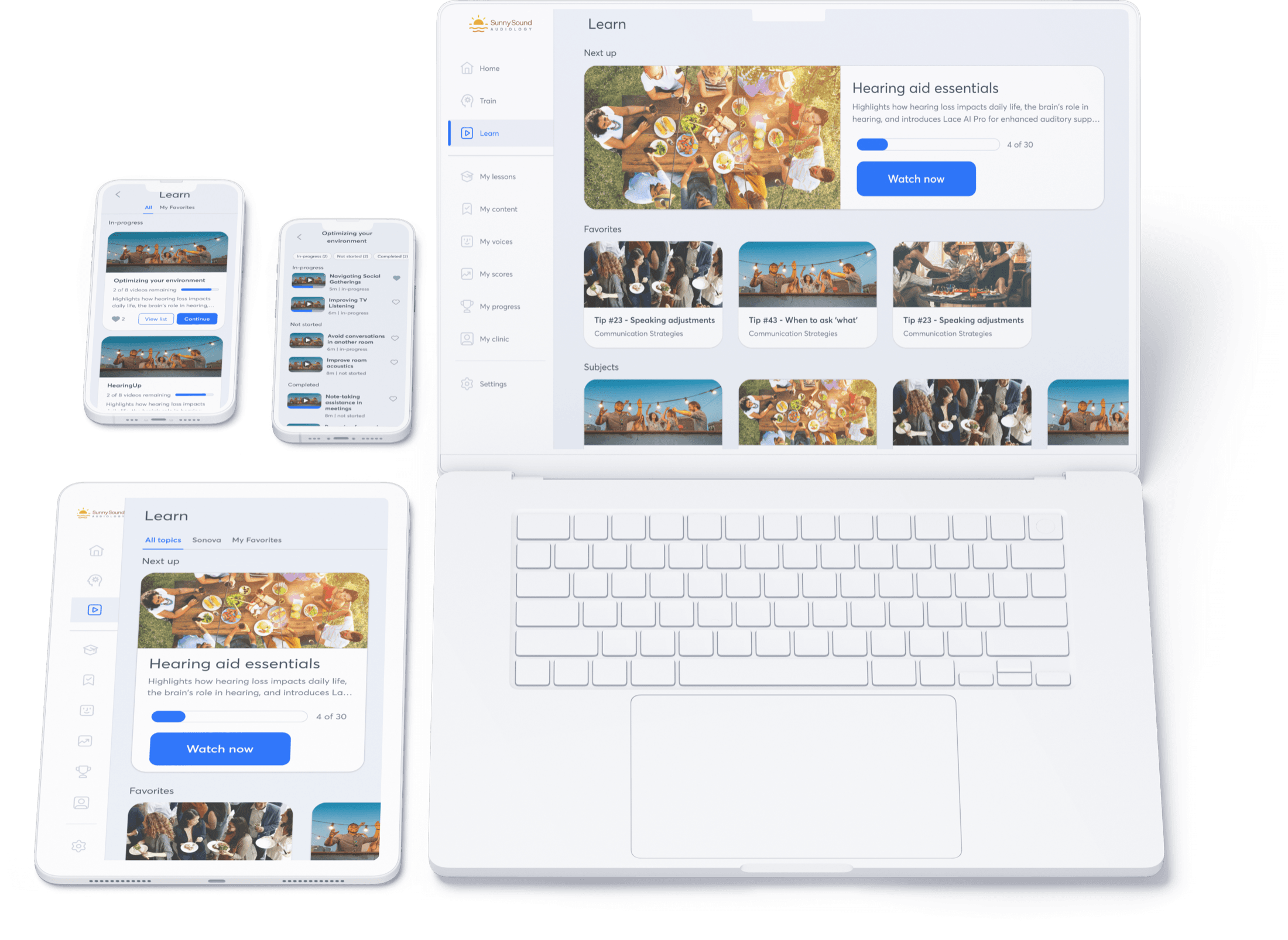
4. Built cross-platform accessibility across iOS, Android, and Desktop to meet patients where they are.
Lace made me feel less like one more defective senior waiting on a medical miracle. I could participate in my own treatment. I could actually help myself. It's easy, it's affordable, it's fun.
Key Design Decisions
App-based cross-platform delivery
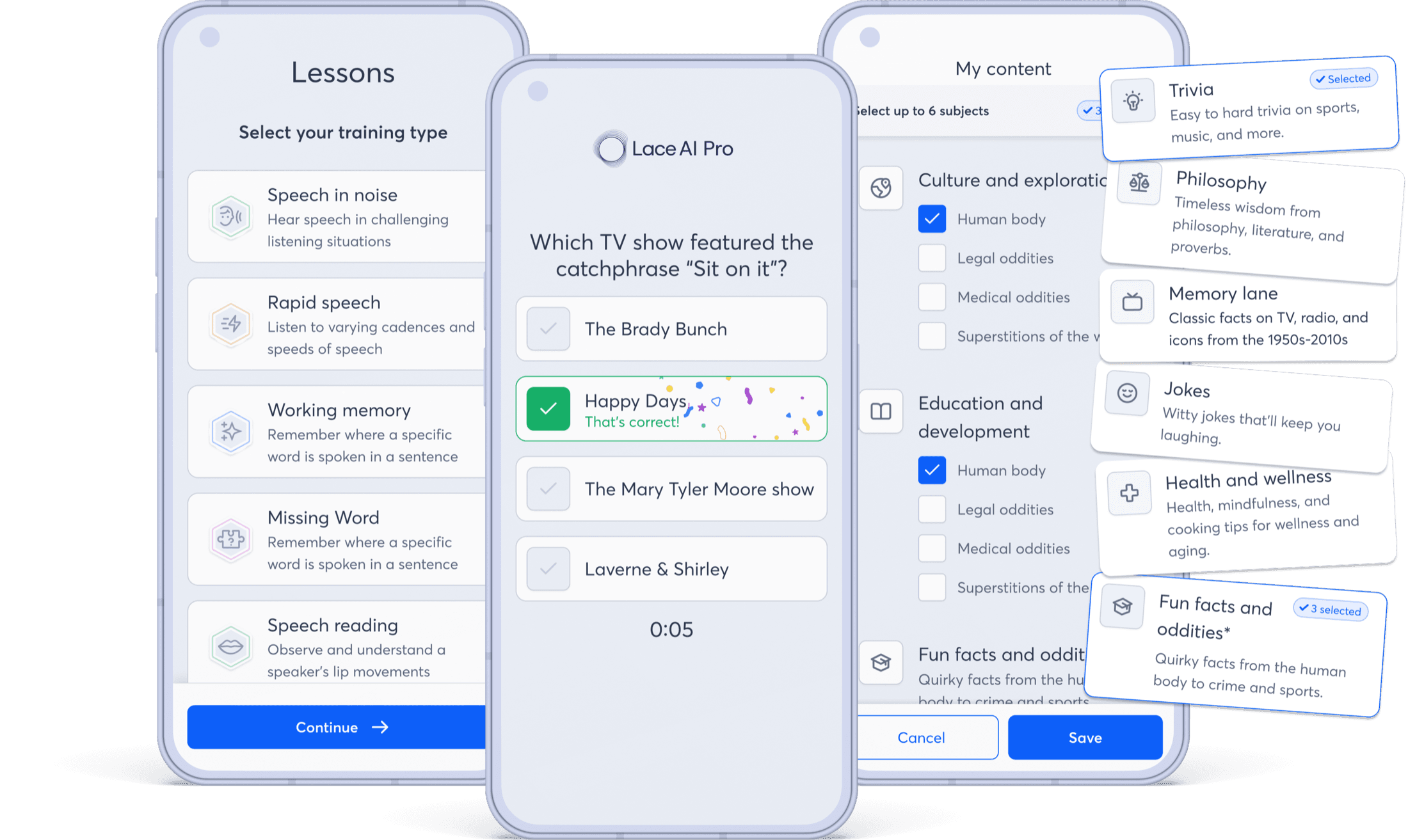
Moved from browser-only to native apps across iOS, Android, and Desktop. Patients train when and where they live, not only in scheduled clinic sessions. This was a structural departure from Legacy LACE and a prerequisite for hitting daily-use targets.
Lifetime + subscription model framing
A lifetime license option aligned the business model with patient commitment: patients who invest once are more motivated to sustain daily use. Subscription tiers layer ongoing premium features on top. Framing positioned the product as a long-term investment in hearing health, not episodic treatment.
Multi-modal training architecture
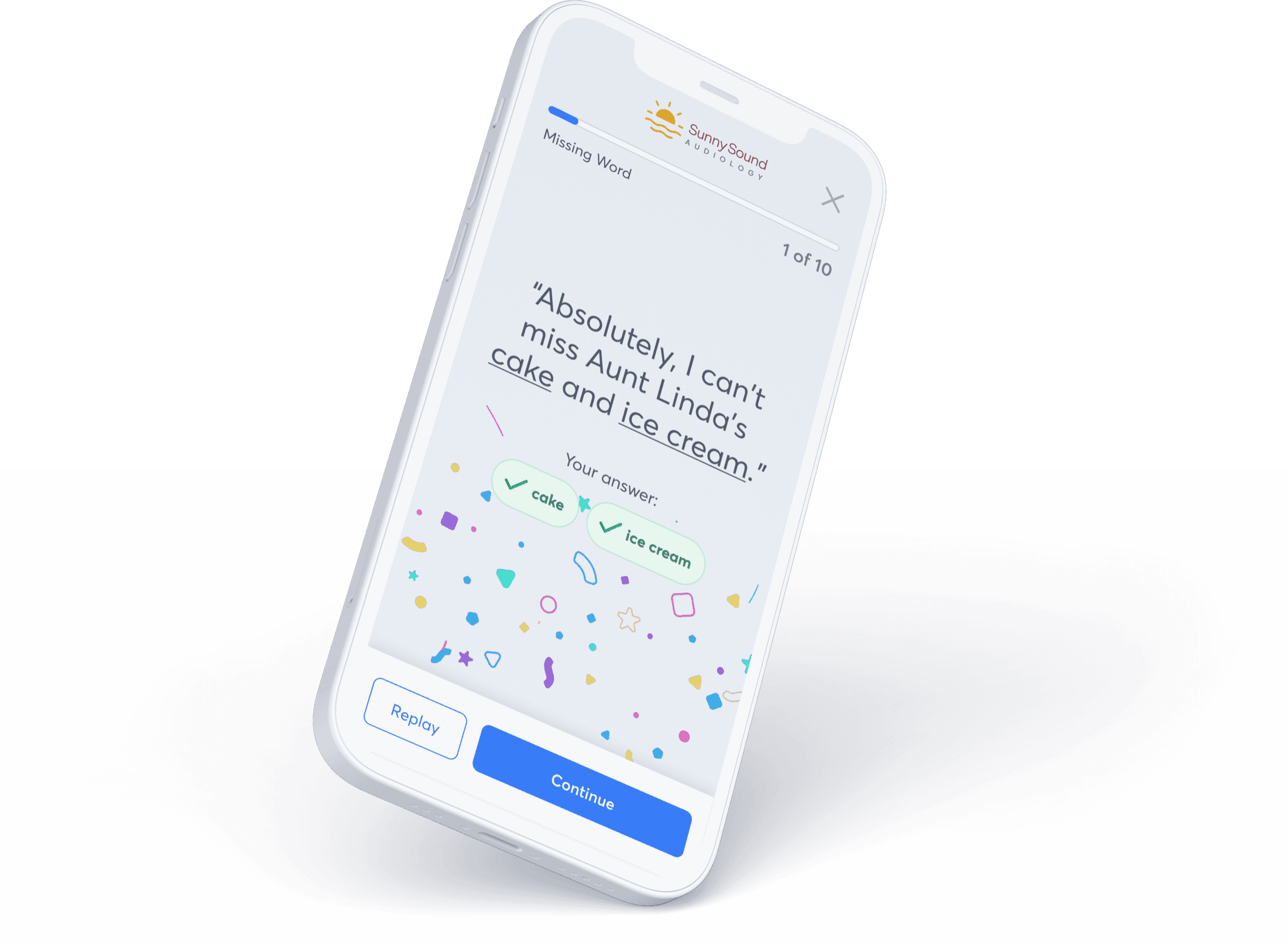
Four distinct training types: Speech-in-Noise, Working Memory, Rapid Speech, and Missing Word, each targeting a different dimension of auditory processing. A training-type selector gives patients and providers clear clinical context and explicit dosing guidance, so every session has a defined purpose.
Content library at scale
10,000+ exercises across 27 topics, structured to surface relevant content without cognitive overwhelm. The architecture had to support clinical breadth (APD, HHL, mild to severe HL) while keeping every session feel focused rather than infinite.
Ease-in / ease-out mechanics
“Softball” opening exercises build patient confidence before difficulty ramps to threshold. At session end, difficulty eases out, leaving patients feeling capable rather than frustrated. This behavioral design choice has direct clinical validation: keeping patients near their accuracy threshold (∼50%) is where neuroplasticity peaks.
Key Screens

System Diagram
Clinical Outcomes
This data strongly outperforms all previous clinical studies in auditory training.
Speech-in-noise training
- +2.6 dB SNR improvement at effective dose (250+ exercises, <1 month)
- +6–9 dB SNR at higher training doses, life-changing for severe patients
- +6–8 dB in severe-to-profound hearing loss cases
- Corresponds to a 15–40% increase in word recognition
Rapid speech training
- +36 WPM average improvement at 250+ exercises (<1 month)
- Range: +35–60 WPM, the difference between being lost and keeping up in conversation
- Benefits patients across the full severity spectrum, including those without hearing loss
Working memory training
- >1.5 seconds faster response time at effective dose (100+ exercises)
- Up to 8 seconds gained in daily conversation for severe cases
- Improvements scale predictably with training dose (R²=0.76)
Missing word training
- Severe cases: 6.8 seconds improvement in response time while advancing to higher difficulty levels
- Average patient advanced from Level 1 to Level 3–5 difficulty
Collaboration
This was a full cross-functional build. I aligned engineering (adaptive algorithm constraints and cross-platform architecture), clinical research (therapeutic validity of training types and dosing thresholds), product marketing (platform narrative and FDA Class II positioning), and executive leadership (go-to-market timing and licensing model).
Outcomes & Impact
- Enabled broader patient applicability: APD, HHL, mild HL, and severe-to-profound populations
- Clinical data outperforms all previous auditory training studies (Dr. Miles Aron, Q1 2025)
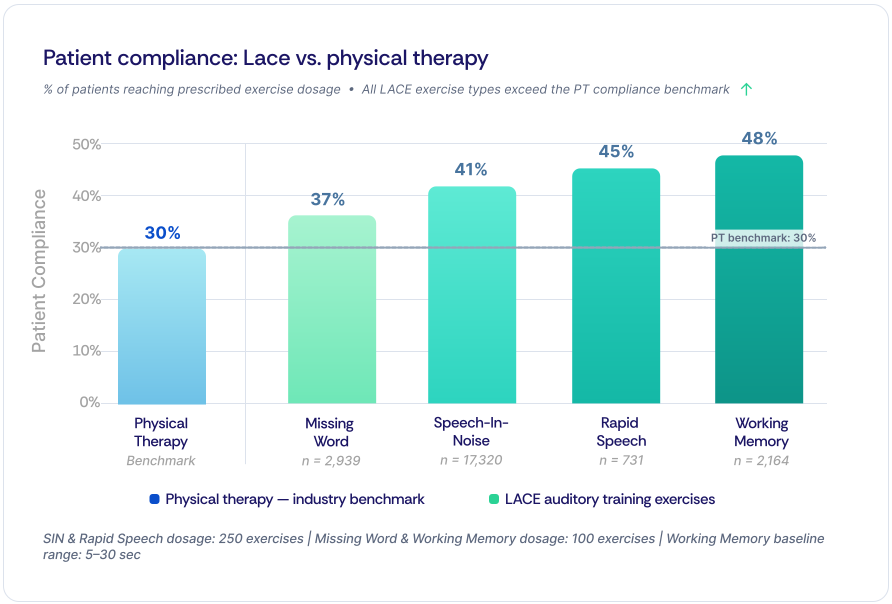
- 37–48% patient compliance vs. 30% for physical therapy. Lace Pro beats the established standard across all four training types
- Strengthened product differentiation in a competitive market
- Supported FDA Class II medical device positioning
- Deployed across 1,000+ clinics in under one year
- Hearing Technology Innovator Award recipient (2024, 2025)
Leadership
- Platform vision and architecture design
- 0→1 product leadership at speed
- Innovation within regulatory constraints
- Cross-functional alignment across engineering, clinical, marketing, and executive teams