Executive Summary
Post-launch, Lace Pro showed strong initial adoption but measurable patient drop-off within the first 14 days. Auditory training only works with consistent daily practice, and in its 20 years Legacy LACE had never been instrumented to show how much practice was enough.
I led the design of a behavioral retention system adapted from high-engagement consumer apps (like Duolingo) and tuned for a regulated healthcare context.
Once patients were training consistently, Neurotone's research team could measure the dose-response curve for the first time. Clinical benefit arrives at about 250 exercises, roughly a month of daily training. The retention system is what gets patients there.
250+
Exercises to clinical benefit: a dose the new platform's data measured for the first time
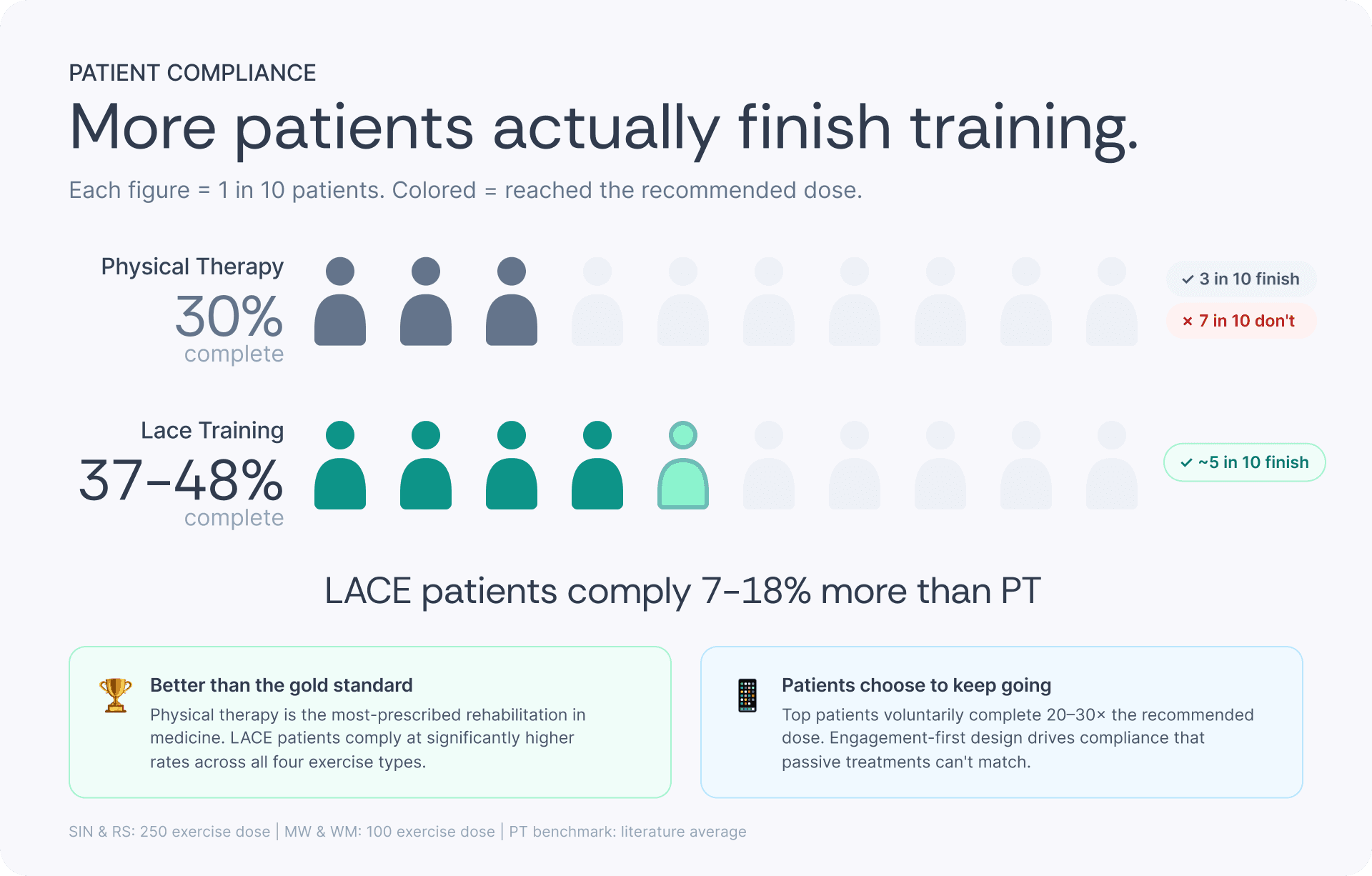
37–48%
Patient compliance across training types, versus about 30% for physical therapy; 61% at the best clinics
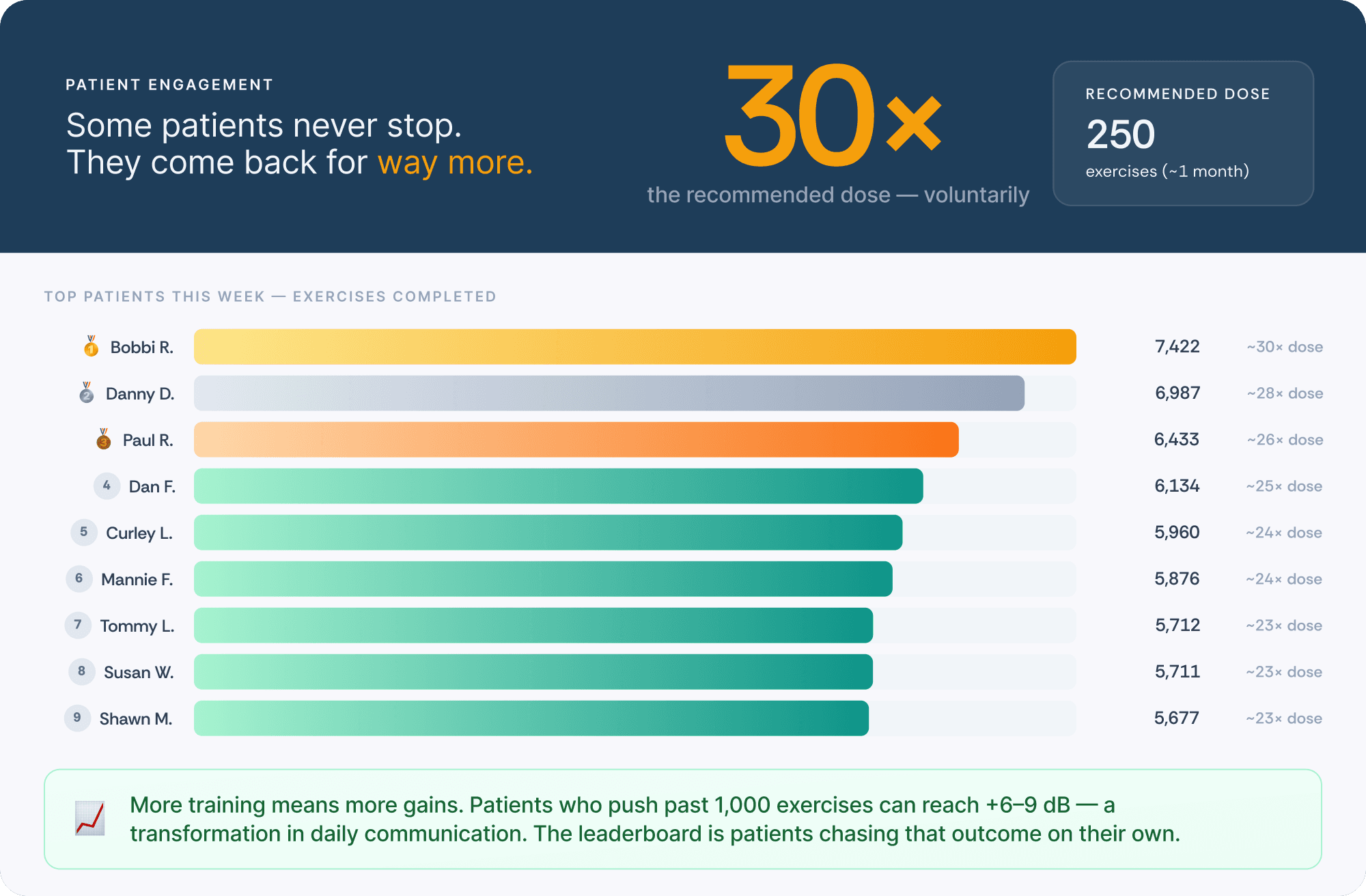
30×
Top patients voluntarily complete 30x the recommended daily dose
The Problem
Patient adherence declined early in the training journey, limiting:
- Clinical benefit attainment
- Daily Active Users (DAU)
- Long-term engagement metrics
- Downstream provider confidence in the product
Without habit formation, clinical science alone could not drive outcomes.
The Strategy
I led the design end-to-end, focusing on three levers:
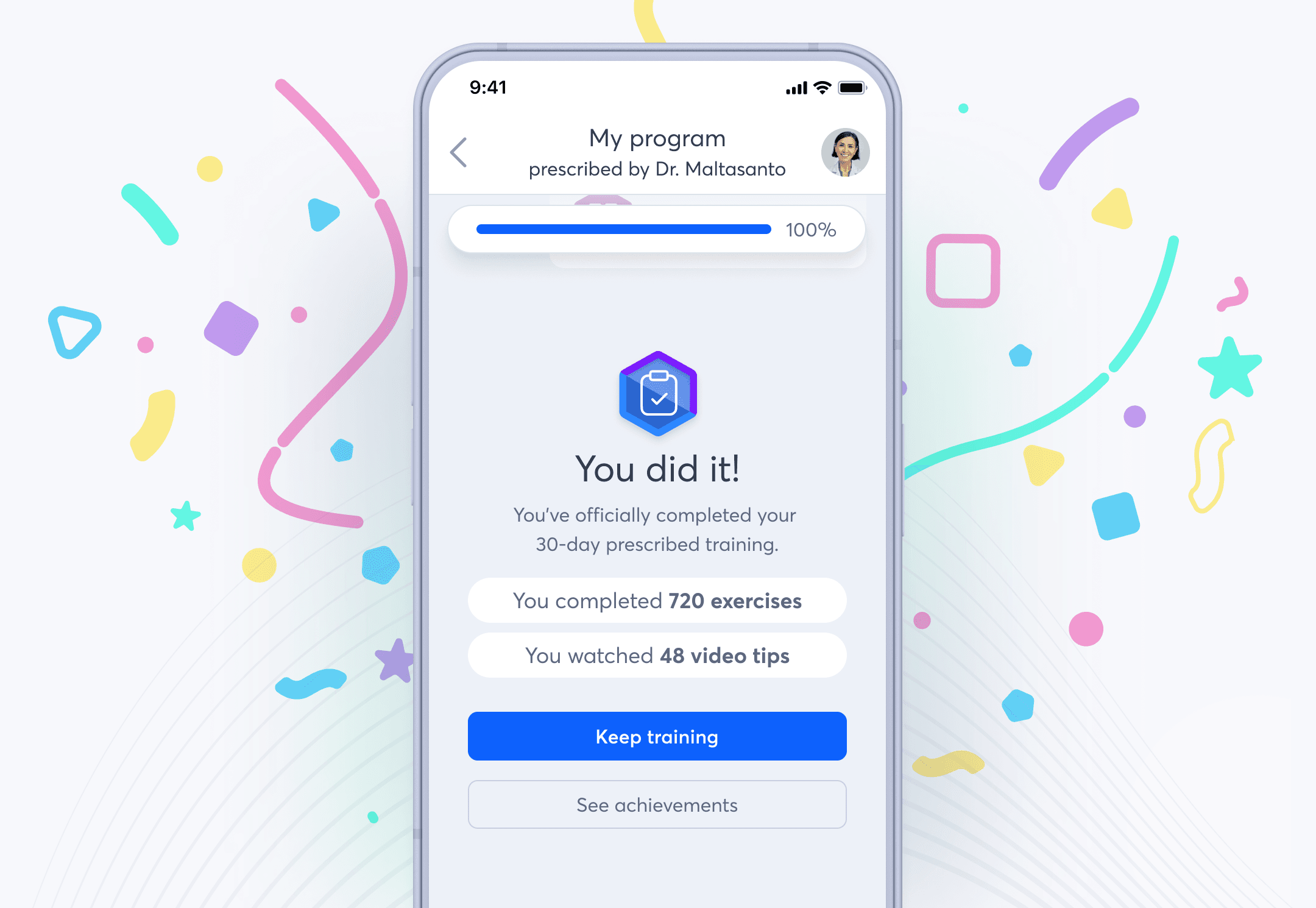
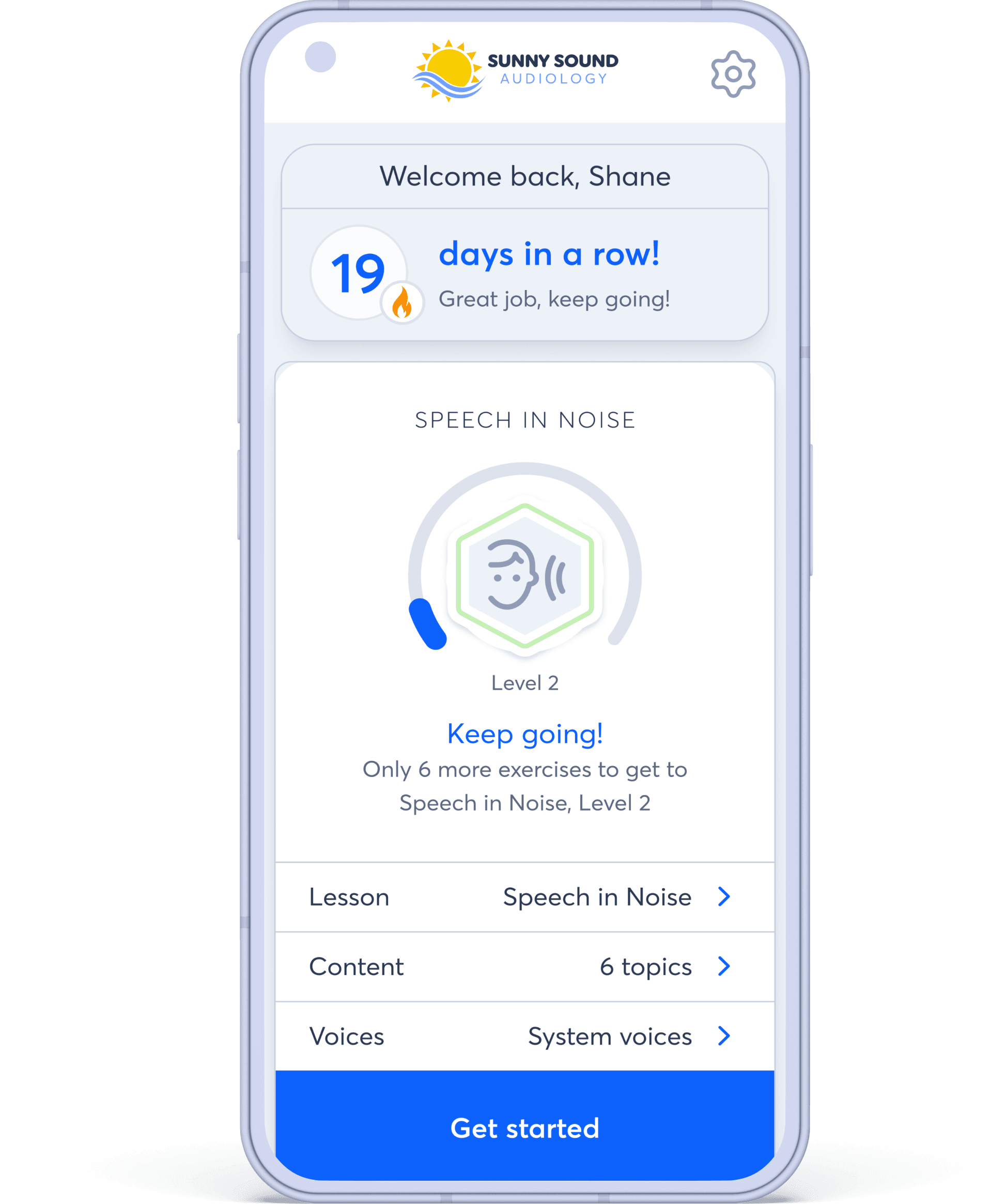
- Habit reinforcement: a streak system and daily nudges
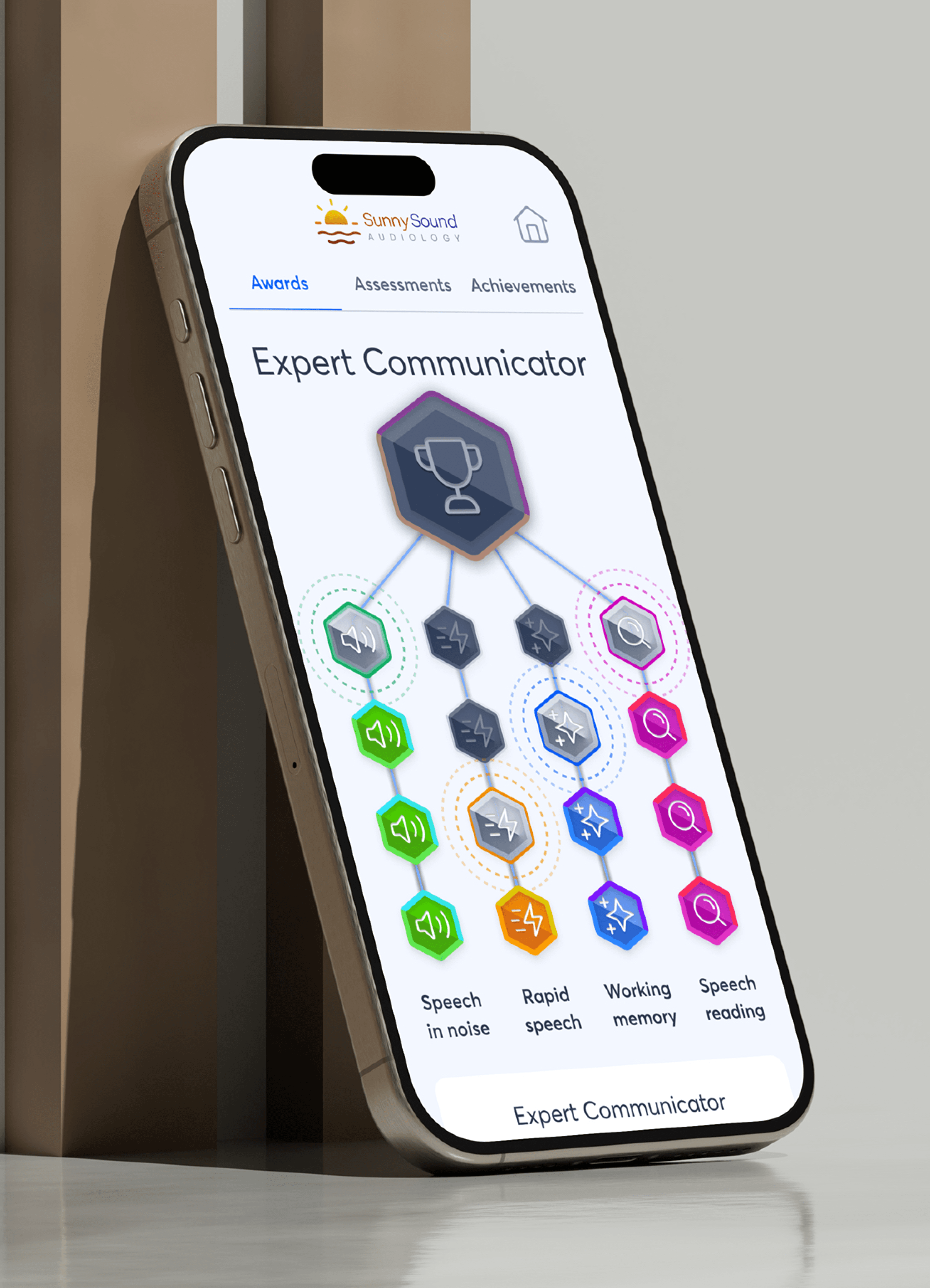
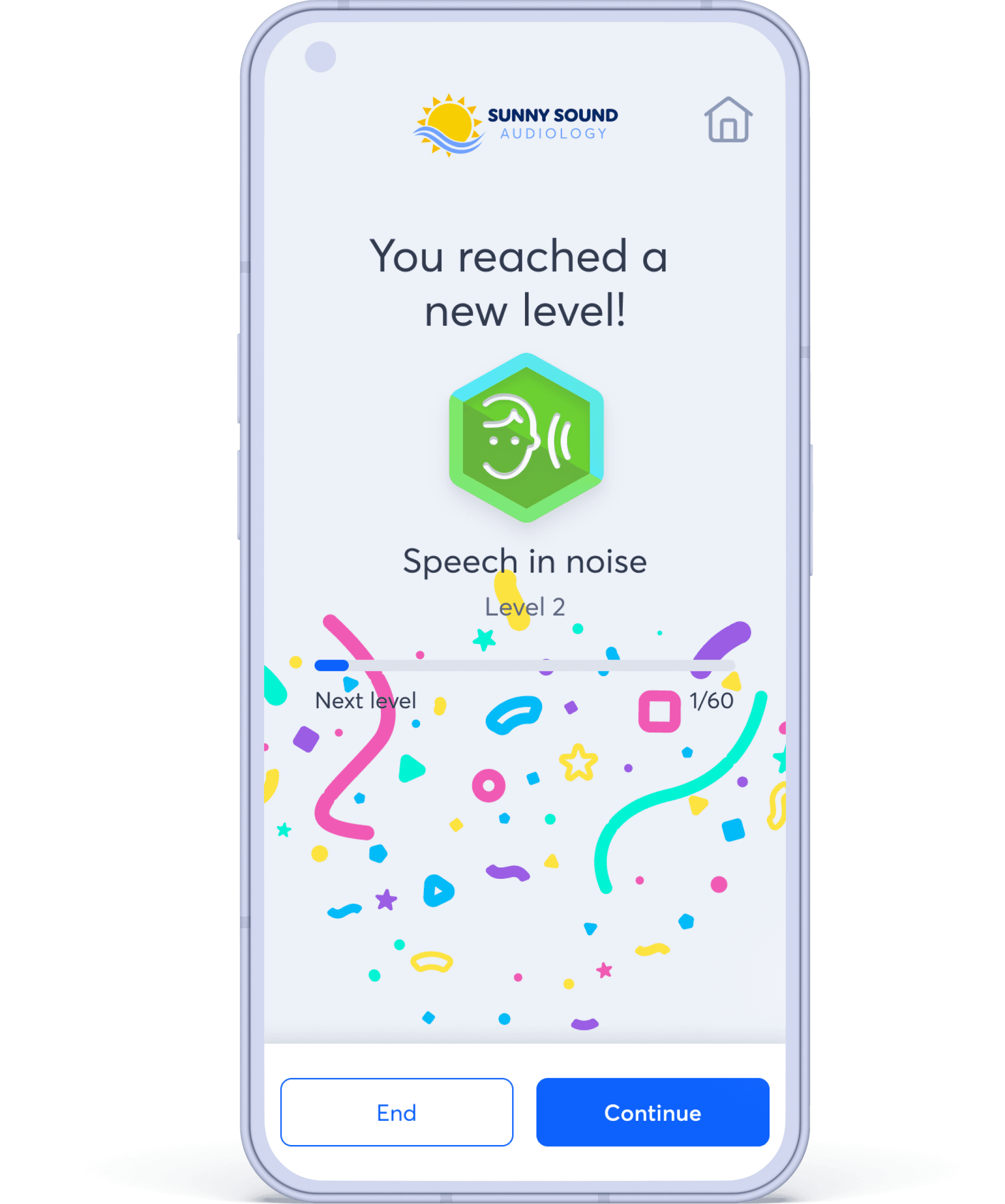
- Progress visualization: the Training Map as a level-based user journey
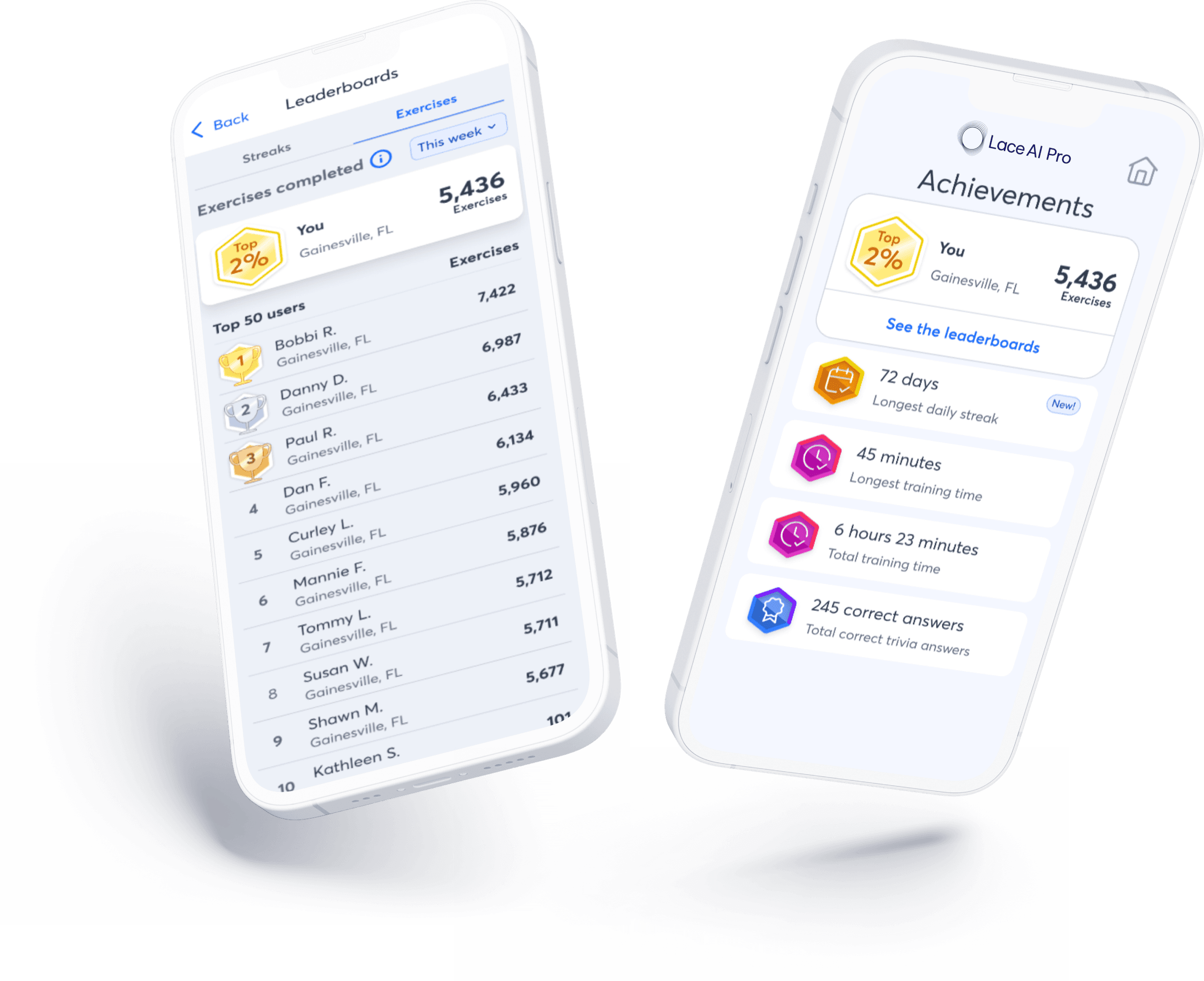
- Social accountability: a leaderboard where patients can see how they compare to other patients
I don't shy away from going to parties now... and my audiologist was shocked that I got a better score in background noise. I know it's because I have learned to focus by using Lace. Thank you!
Key Design Decisions
The Training Map
A visual progression journey that frames exercises as “levels,” not tasks. Progress feels visible and cumulative. Reinforces forward momentum.
Streak mechanics
Daily streak counter prominently surfaced. Positive reinforcement notifications. Escalating motivational messaging tied to behavioral commitment research.
“At risk” notification system
Triggered at key times. Tone: supportive, not punitive. Early intervention prevents drop-off spirals.
A patient training leaderboard
Enabled patients to share progress with other patients while still retaining privacy in a healthcare-related environment. Reinforced accountability and pride. Strengthened the engagement loop.
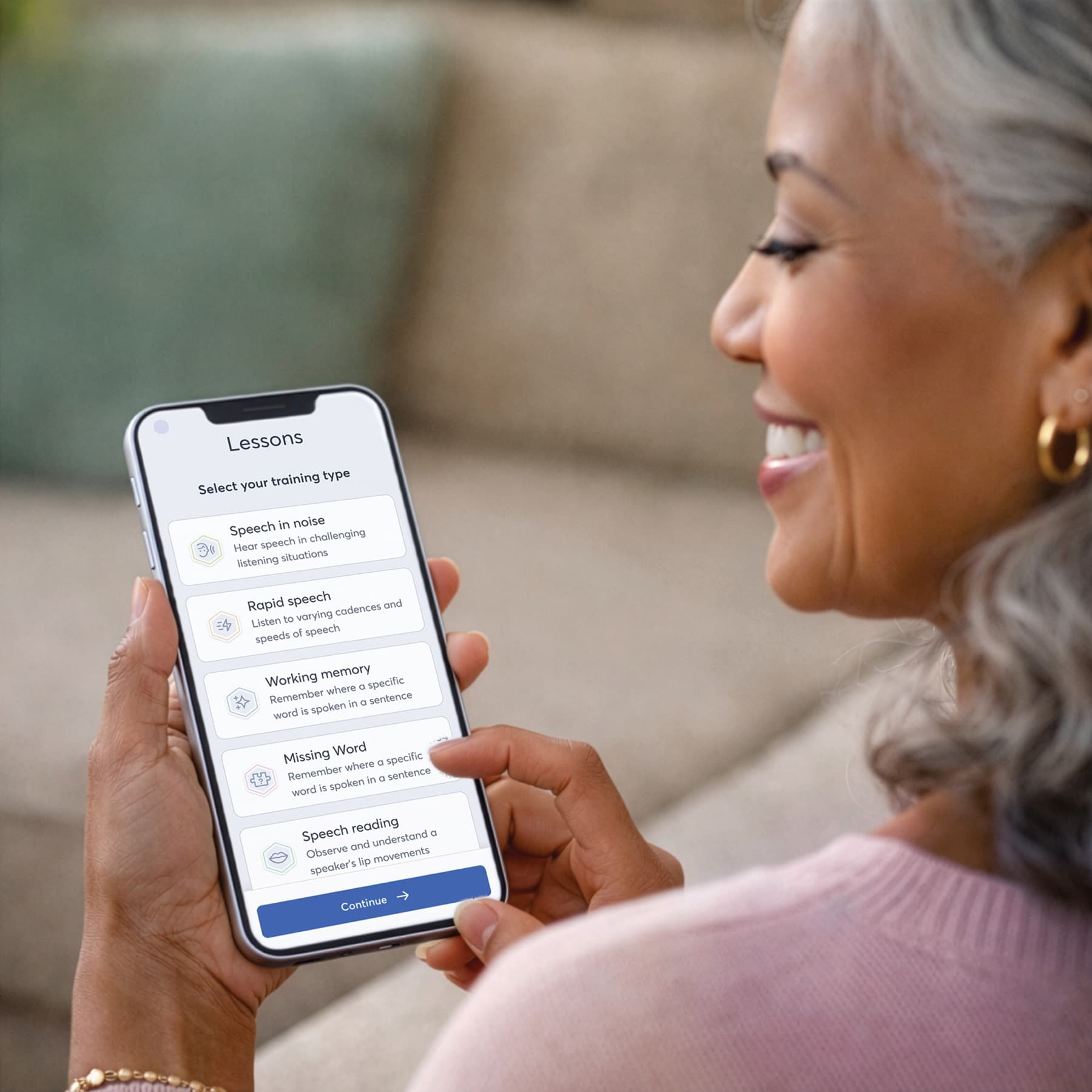
Key Screens
System Diagram
Collaboration
Worked with engineering on notification architecture and trigger timing to align with behavioral research on optimal nudge intervals. Josh Jordan and I held the clinical line ourselves, making sure every game mechanic reinforced the clinical goal of reaching the effective dose without eroding the product's medical credibility.
The “Brag Feature” emerged from a cross-functional conversation with the provider success team, who identified that patient-to-provider progress sharing was a missing link in the engagement loop.
Outcomes & Impact
- Significant increase in Daily Active Users (DAU)
- Improved 14-day retention rate
- Higher percentage of users reaching therapeutic dose
- Measurable improvement in clinical progress scores
- Stronger provider confidence in prescribing Lace
What I'd Do Next
We did early research on how patients used the app, but it wasn't until the leaderboard and streaks shipped that we saw how hard people would train. Some patients reached 100-day streaks without a single break.
That success points to the one thing I'd change: a streak pause. Right now a vacation or a sick day wipes out a streak, which punishes exactly the patients who have been most committed. Letting someone protect a streak for a day or two would keep that motivation intact.
Leadership
- Post-launch optimization leadership
- Behavioral design maturity
- Consumer mechanics adapted to clinical contexts
- Data-informed iteration
- Long-term outcome orientation, not just feature shipping