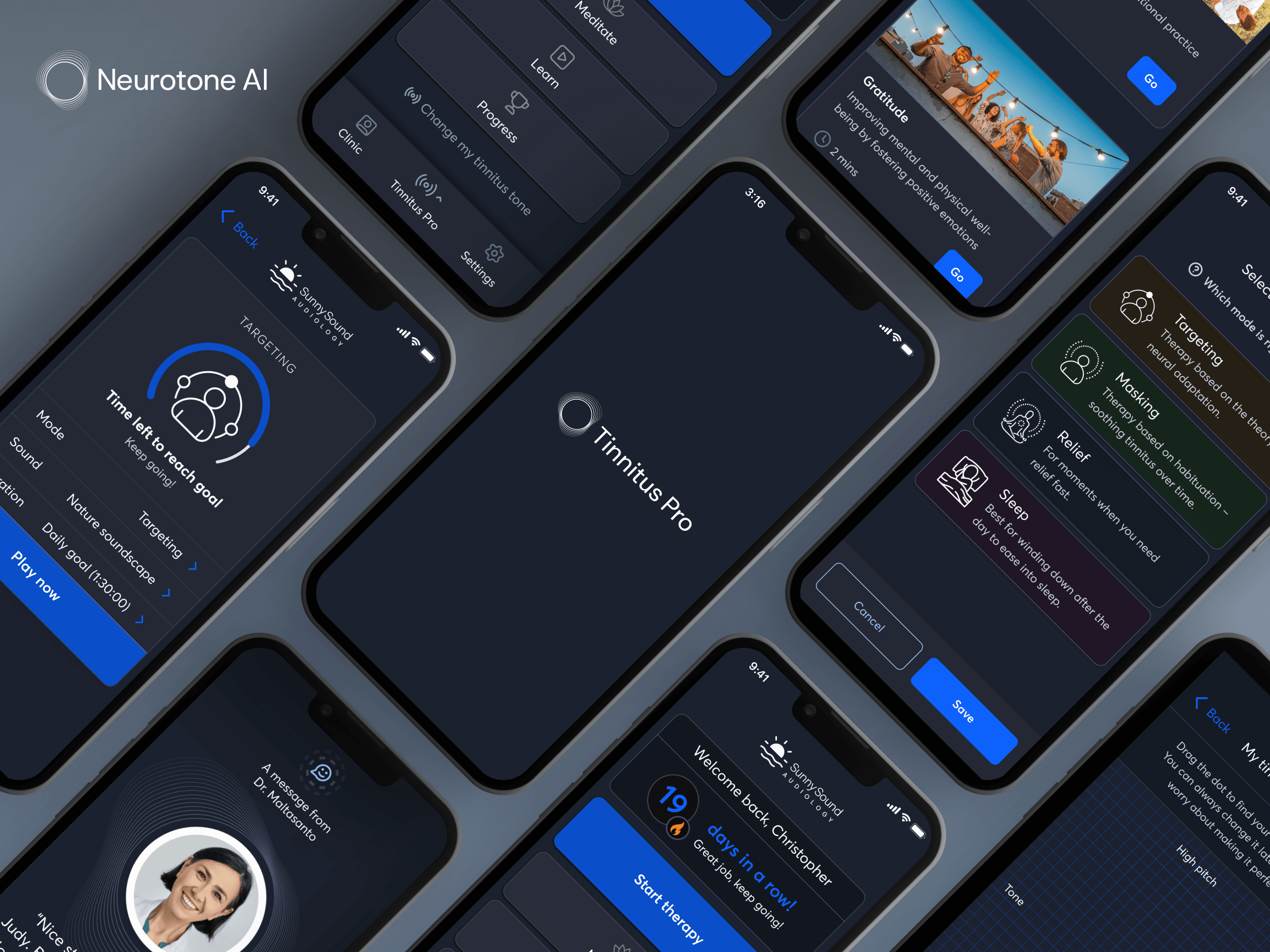
Executive Summary
Tinnitus affects millions, yet treatment options are fragmented, unclear, and rarely structured. I led the end-to-end design of Tinnitus Pro, a provider-prescribed digital therapeutic that delivers structured, evidence-based tinnitus relief through guided sound therapy and behavioral support, prescribed by audiologists and managed at home by patients.
In an April 2026 first-look analysis, 40% of patients with bothersome tinnitus achieved clinically meaningful improvement, a reduction of more than 7 points on the THI (Tinnitus Handicap Inventory) per the Zeman 2011 standard, with a median reduction of 13 points among those who improved.
40%
Of bothersome-tinnitus patients achieved clinically meaningful improvement
−13 pts
Median THI reduction among those who improved
19h
Sound therapy engagement
Tinnitus Pro Overview
The Problem
Patients dealing with tinnitus face a fragmented, discouraging treatment landscape:
- No structured digital therapeutic existed for audiology providers to prescribe; tinnitus management was limited to in-clinic counseling or unvetted consumer apps
- Treatment options were fragmented and unclear; patients cycled through sound machines, apps, and supplements with no clinical framework or provider oversight
- Existing digital tools were tied to the hearing-aid ecosystem, leaving providers without a prescribable solution for the broader tinnitus population without hearing loss
- Patients who had already tried and failed multiple solutions arrived burned out and skeptical; emotional UX had to account for this exhaustion
The Strategy
I led the design end-to-end, focusing on four strategic pillars:
- Reframe as structured therapy: position Tinnitus Pro as a clinical program, not another app, to establish credibility with a burned-out patient population
- Daily adherence by design: build habit loops and session architecture that make consistent use the path of least resistance
- Clinical credibility + patient usability: balance evidence-based framing with accessibility patients can manage independently at home; rigorous enough for providers to prescribe, simple enough for patients to sustain
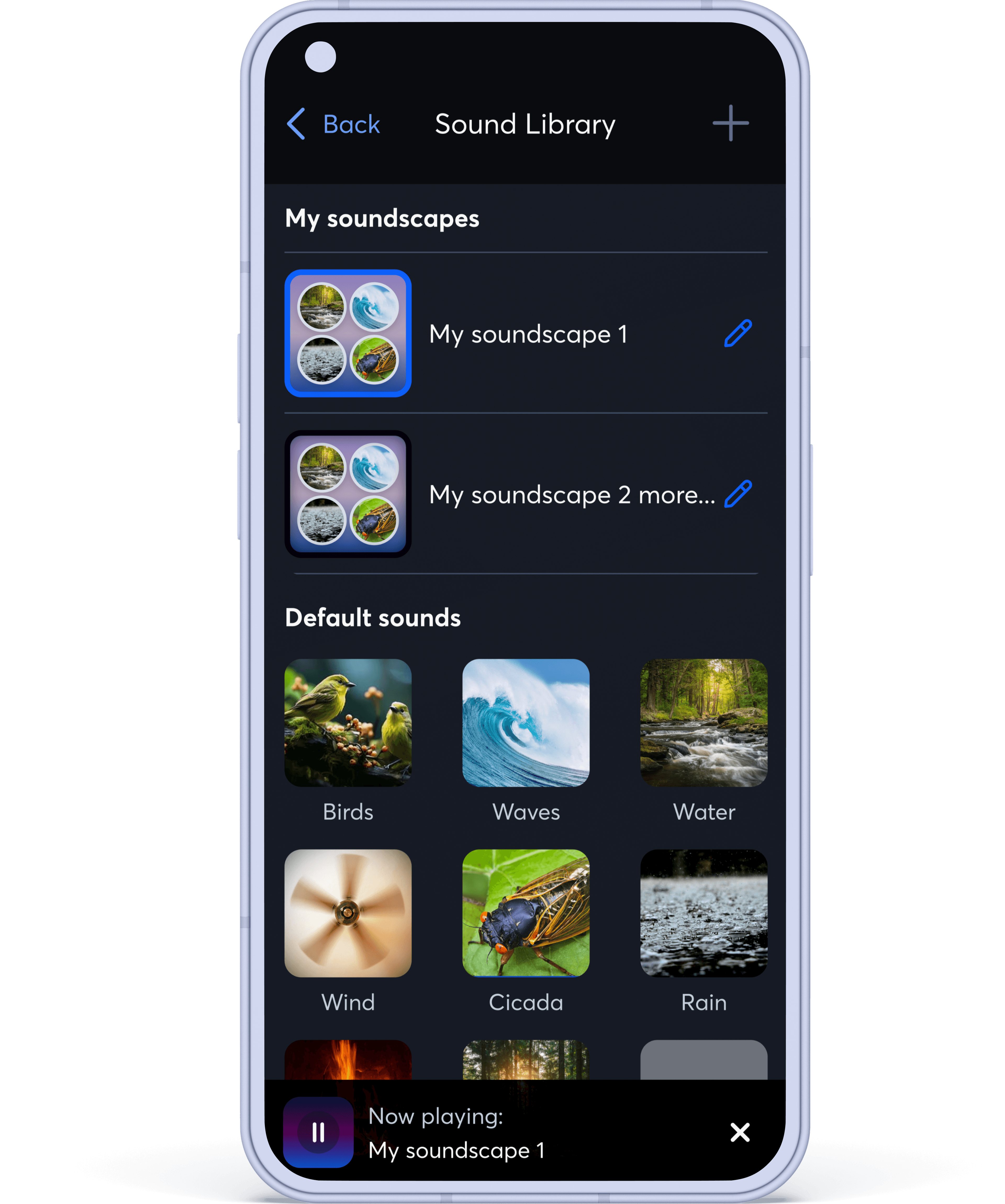
- Modular sound therapy architecture: design a flexible sound library and session structure that can adapt to individual tinnitus profiles and expand over time
Key Design Decisions
Onboarding as symptom triage
First-run onboarding doubles as a structured symptom intake. Rather than generic sign-up questions, patients answer a short validated sequence that seeds their initial sound therapy prescription. Sets clinical expectations from minute one.
Therapy framing, not app framing
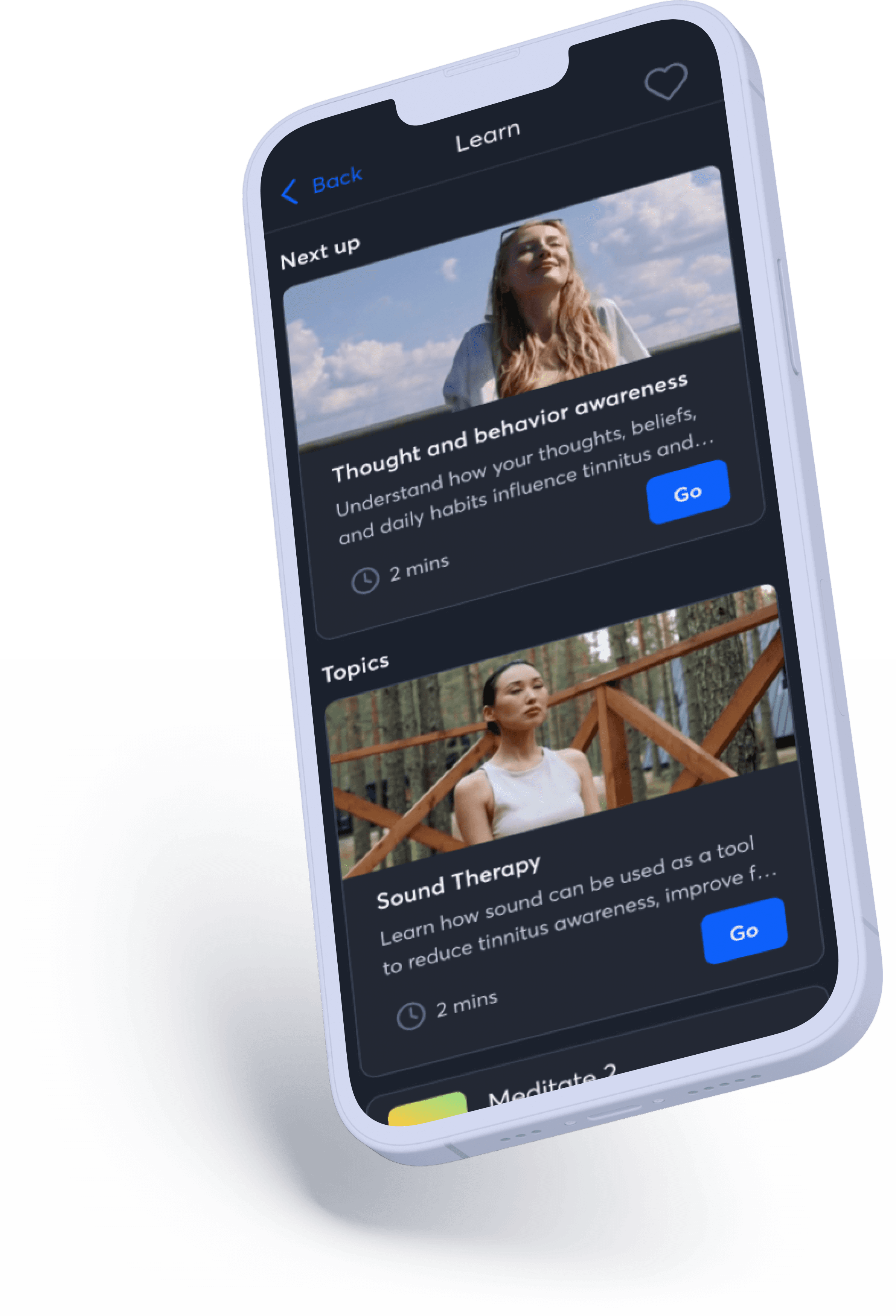
Every surface uses "session," "therapy," and "program" language, never "content," "tracks," or "features." This is a deliberate choice to signal clinical intent and reduce the perception that patients are using entertainment software for a serious condition.
Low cognitive load session design
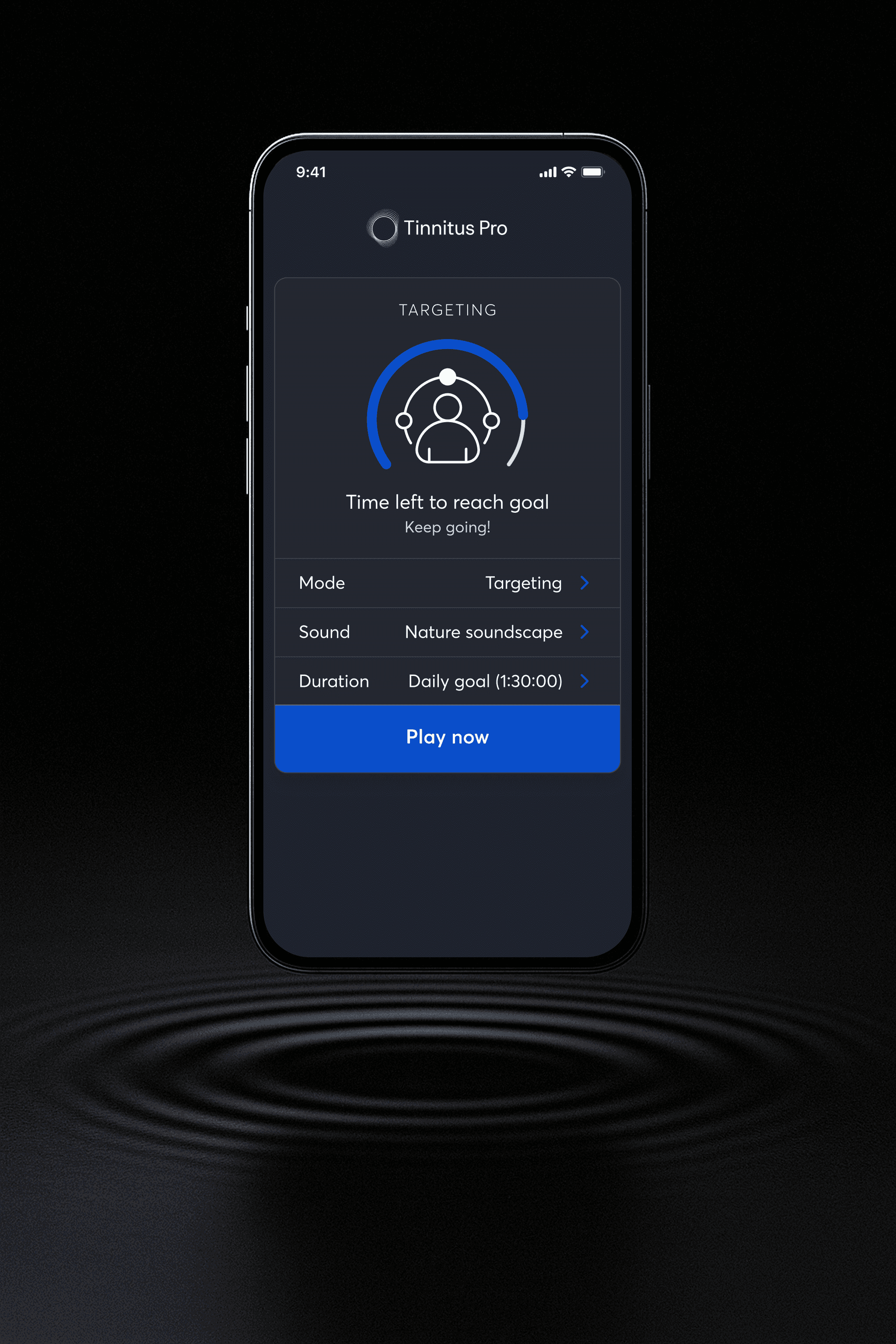
Tinnitus patients often experience anxiety, fatigue, and concentration difficulty. Session UI is minimal: one primary action, no distractions. Cognitive load was treated as a clinical constraint, not a nice-to-have.
Modular sound therapy architecture
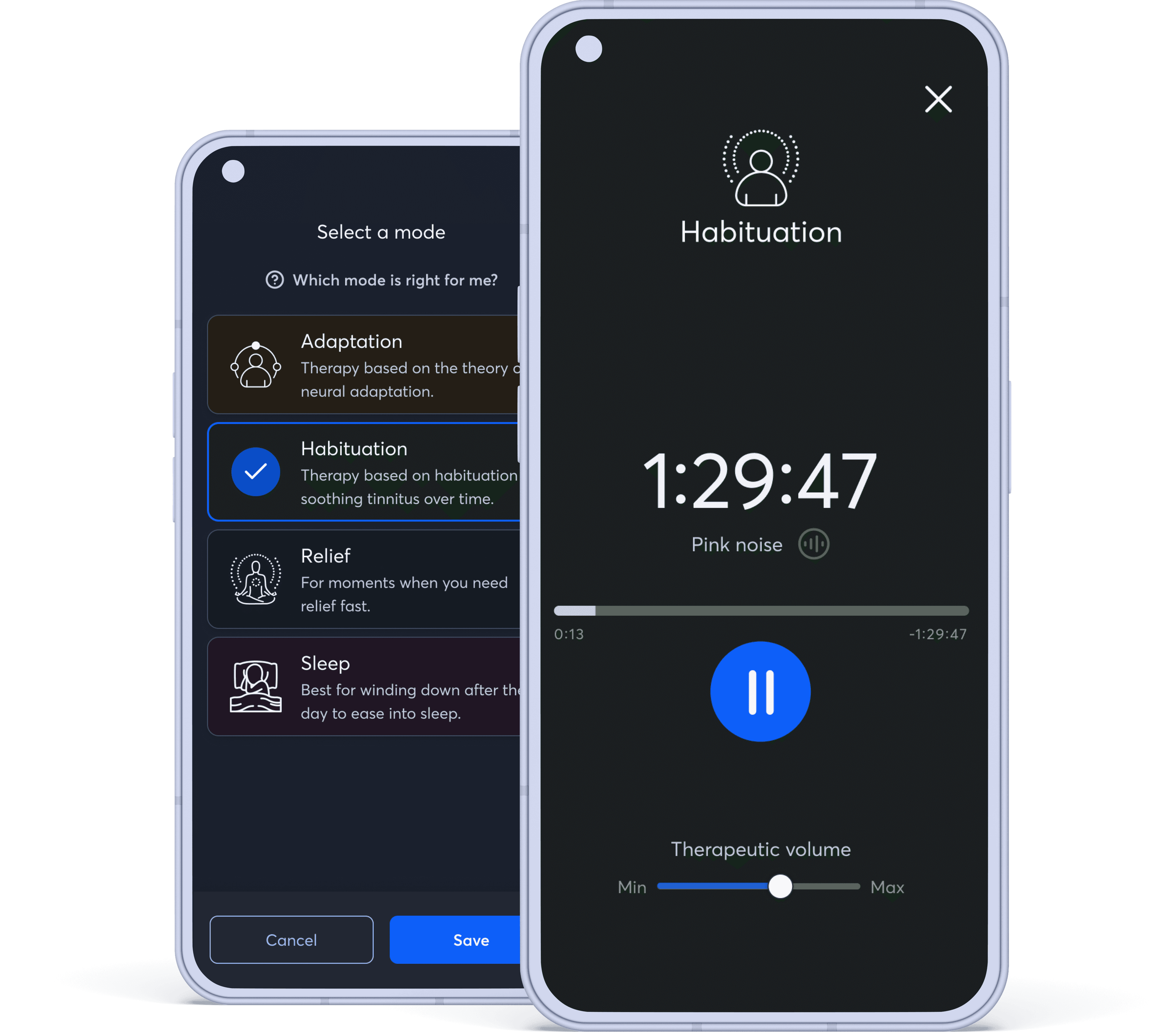
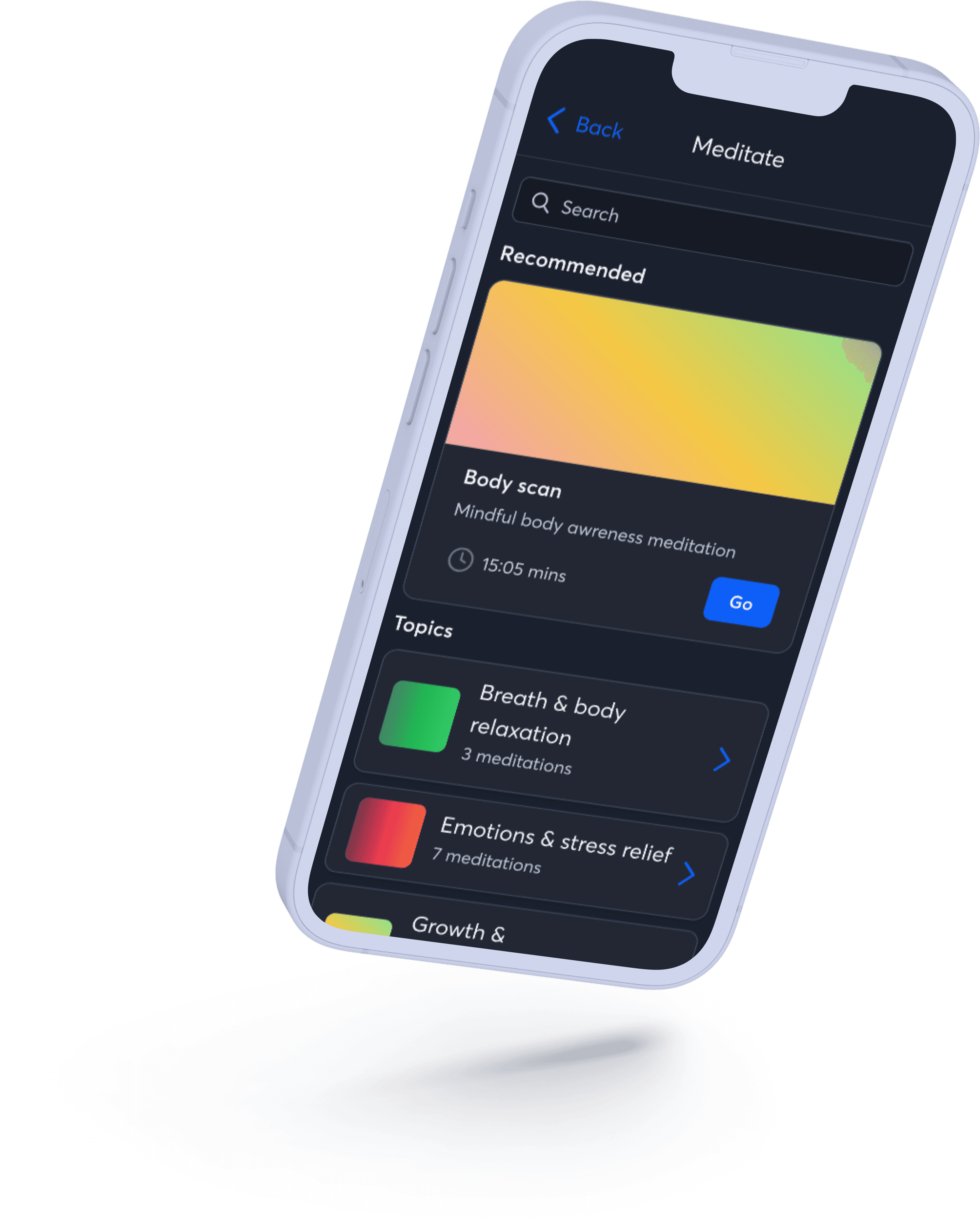
Rather than a fixed library, sound therapy is structured as composable modules (tone type, frequency range, masking level) so future clinical guidance can update prescriptions without requiring new UX. This also allows for AI-driven personalization downstream.
Habit loop visibility
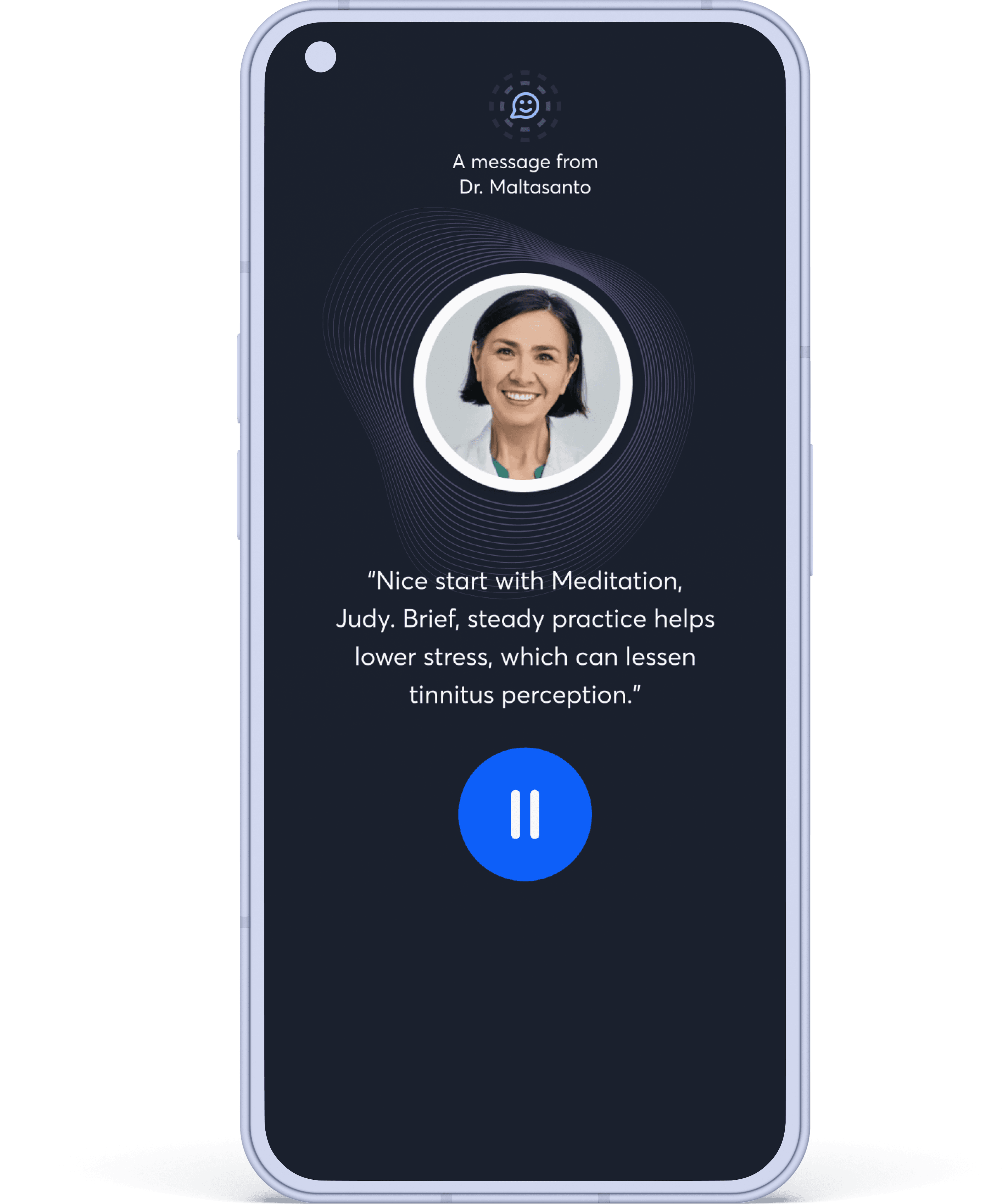
Progress and streaks are surfaced at session end and on the home dashboard. Unlike the hearing training product (which shows cumulative levels), Tinnitus Pro emphasizes consistency over quantity, because the therapeutic mechanism is daily exposure, not skill accumulation.
Key Screens
System Diagram
Collaboration
Worked with clinical leadership to validate the symptom intake sequence against existing tinnitus assessment frameworks, ensuring onboarding didn't inadvertently create diagnostic expectations. Collaborated with legal on how to frame clinical language in a provider-prescribed context, particularly around "clinically meaningful improvement" claims and THI references.
Worked with engineering on the modular sound architecture to ensure the prescription model was data-driven from day one, not hardcoded. This set up the infrastructure for future AI-personalized therapy paths.
Outcomes & Impact
In an April 2026 first-look analysis of the initial cohort (N=100 of 600 enrolled), 40% of patients with bothersome tinnitus (subgroup N=25) achieved clinically meaningful improvement, a THI reduction of more than 7 points per the Zeman 2011 standard, with a median reduction of 13 points among those who improved. Tinnitus severity at baseline predicted response, consistent with existing literature.
Patient spotlights (THI score: baseline → follow-up):
| Patient | Baseline THI | Follow-up THI | Reduction |
|---|---|---|---|
| Patient A | 66 | 32 | −34 pts |
| Patient B | 40 | 14 | −26 pts |
| Patient C | 50 | 30 | −20 pts |
| Patient D | 56 | 42 | −14 pts |
THI (Tinnitus Handicap Inventory): clinically meaningful improvement defined as >7-point reduction (Zeman et al., 2011). Total program engagement: 19h sound therapy.
- Opened a new revenue channel for audiology providers: a prescribable tinnitus therapeutic outside the hearing-aid-dependent ecosystem
- Clinical validation data generated within the first-look period, supporting future marketing claims and provider confidence
- Established a differentiated position in a fragmented market, giving providers an evidence-based tinnitus program to prescribe at scale
- Built a modular architecture that enables AI-personalized therapy prescriptions in future product iterations
- Demonstrated Neurotone's ability to design, validate, and ship a regulated provider-prescribed therapeutic end-to-end in under four months
Leadership
- End-to-end 0→1 product leadership: concept through launch-ready design in under 4 months
- Cross-functional alignment across clinical, legal, and engineering under significant regulatory and timeline constraints
- Patient-centered research approach with an anxious, underserved population that has high skepticism of unproven solutions
- Balanced clinical credibility with patient usability: rigorous enough for providers to prescribe with confidence, accessible enough for patients to sustain independently
- Data-informed design validated against THI benchmarks; built measurement into the product from day one